Learn the Basics of Options
Discover the world of options and learn about their advantages over futures contracts. Understand the fees involved and uncover the key factors that influence option prices. Explore major options b...
DEALING.
6/23/20233 min read


Welcome to the world of options, where possibilities abound like leaves in the wind.
Unlike futures contracts with their fixed obligations, options offer the right, but not the obligation, to buy or sell an asset at a specific price (strike price) by a certain date (expiration date).
Think of it like having a VIP pass to buy or sell something at a preferred price within a set timeframe.
Fees in Focus
While options open doors to diverse strategies, remember the associated costs:
Commissions: Brokers charge fees for executing your trades, similar to buying stocks.
Premium: This is the price you pay upfront for the option contract, regardless of whether you exercise it or not.
Pricing Puzzle: Unveiling the Key Players
Several factors influence the price of an option:
Intrinsic value: The difference between the current asset price and the strike price (in-the-money options have positive intrinsic value, while out-of-the-money options don't).
Time value: This reflects the remaining time until expiration, generally decreasing as the expiration date approaches.
Volatility: Higher volatility (expected price swings) leads to higher option prices.
Interest rates: They influence the time value and can affect option pricing strategies.
Giants of the Game: Major Options Brokers:
Many reputable brokers facilitate options trading, including:
Interactive Brokers: Offers a broad range of options contracts and platforms.
TD Ameritrade: Provides educational resources and user-friendly platforms for options trading.
Tastyworks: Popular among options traders with advanced features and educational tools.
Basic Strategies: Unlocking Option Power:
Options offer various strategies to suit different market views and risk tolerances. Here are a few fundamental ones:
Buying Calls: You gain the right (but not the obligation) to buy an asset at the strike price if the price goes up.
Buying Puts: You gain the right (but not the obligation) to sell an asset at the strike price if the price goes down.
Covered Calls: Selling a call option against a stock you already own, generating income but limiting potential upside.
Protective Puts: Buying a put option on a stock you own as insurance against a price decline.
Math Made Clear: Understanding the Calculations:
While option pricing involves complex formulas, here's a simplified approach:
Option price: Consider both intrinsic value and time value, often determined using the Black-Scholes model.
Profit/loss: Track the difference between the premium paid and the profit/loss from exercising the option, considering commissions.
A Historical Glance: From Origins to Evolution:
Option contracts have rich history, dating back to ancient Greece. Standardized options exchanges emerged in the 20th century, expanding accessibility and fostering diverse trading strategies.
Ready to Dig Deeper?
Remember, options trading carries inherent risks and requires thorough understanding before venturing in. Consider paper trading simulations, seek educational resources, and consult a financial advisor before risking real capital.
Bonus Tip: Explore resources like the Options Clearing Corporation (https://www.theocc.com/) and Investopedia (https://www.investopedia.com/) for in-depth explanations, educational tools, and strategy guides on options trading.
With knowledge and practice, you can navigate the exciting world of options and potentially unlock new trading possibilities.
Francisco F. De Troya
Algorithmic trading & derivatives professional.
Executive Chairman, Blockmas

How To Invest in a Portfolio of Trading Systems?
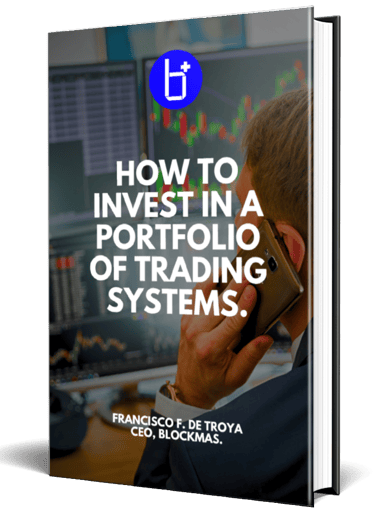
Almost all retail traders lose all their money in less than 90 days by applying discretionary trading strategies. Successful traders invest in a decorrelated portfolio of algorithmic trading systems. In this small ebook we dive into how to analyse trading systems, how to invest in them, and how to build a portfolio of institutional grade algorithms.

The Dark Side of Brokers, And How To Win Them.
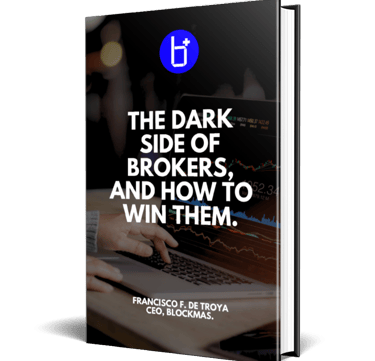
Most CFD brokers and derivatives firms profit from their clients' losses by being their counterparties and do everything in their power to make them lose their funds as quickly as possible. In this small ebook, our founder, Francisco F. De Troya, who worked for 3 of the largest brokerage firms in the world, exposes how the industry works and how you can really get the best results in the financial markets with algorithmic trading.